EMDR therapy has a reputation for eye movements and breakthrough moments, yet the quieter foundation work is what keeps people safe and makes change last. Preparation and resourcing sit at the heart of that foundation. Many clients ask what they can do between sessions, or before starting trauma therapy, that actually helps without stirring things up too much. The good news: there is a lot you can do at home to strengthen your nervous system, build internal support, and rehearse skills that make formal processing smoother. The caution: you need clear boundaries, a plan for safety, and a respect for dosage.
This piece draws on years of guiding individuals, couples, and families through EMDR therapy, including people with complex trauma, neurodivergent profiles, and kids who need playful, concrete tools. I will not teach you to process trauma at home on your own. That belongs with a trained clinician. What follows is a practical, detailed guide to the parts you can do safely: preparing your body and environment, learning bilateral stimulation that soothes rather than overwhelms, building your inner resources, and setting up routines that lower distress over time.
What resourcing means in EMDR
Resourcing is the skill-building phase of EMDR therapy where you learn to regulate, not relive. We expand your window of tolerance, help your system shift out of threat states, and install supports that you can access quickly. That might be a felt sense of safety, a protective inner figure, a memory of competence, or a belief such as I can get through this. In sessions we measure distress using SUDs - Subjective Units of Disturbance - usually a 0 to 10 scale. When people learn resourcing well, I often see SUDs drop 2 to 4 points within minutes, and the effect generalizes to daily life.
Done regularly at home, resourcing can reduce baseline activation, shorten the tail of stress responses, and make triggers feel less sticky. Think of it as physical therapy for your nervous system. You are training neural pathways of calm, connection, and choice.
What is reasonable to do at home - and what is not
At home, you can safely practice:
- grounding skills bilateral stimulation used for calming guided imagery such as safe or calm place container imagery for tucking away intrusive material resource installation that reinforces positive states, if you can keep distress below a 4 on the SUDs scale
Avoid:
- trying to target traumatic memories without a therapist pushing through high activation to force a breakthrough long sessions that leave you flooded mixing alcohol, cannabis, or sedatives with practice, which blunts learning and can increase rebound anxiety
The line I use is simple: if your distress rises rapidly, or you start feeling detached, unreal, dizzy, or outside your body, stop, ground, and return to the present. You are not failing; you are reading your nervous system correctly.
A short safety checklist before home practice
- Do I have at least 30 to 45 minutes with no obligations immediately afterward? Do I have a way to contact support if needed - a friend, partner, or therapist voicemail? Is my baseline today workable - SUDs 0 to 4 - rather than already overwhelmed? Do I have a specific plan for what I will practice, not just I will work on my trauma? If I start to feel worse, what will I do first, second, and third to settle?
Print this or save it to your phone. Run it before any at-home work.
Setting up your space
Your environment does a lot of heavy lifting. If the space is cluttered, cold, noisy, or associated with conflict, your body will work upstream to settle. Choose a spot you can return to often, like a favorite chair by a window or a corner you claim with a small lamp and a soft throw. Consider three layers: sight, sound, and touch.
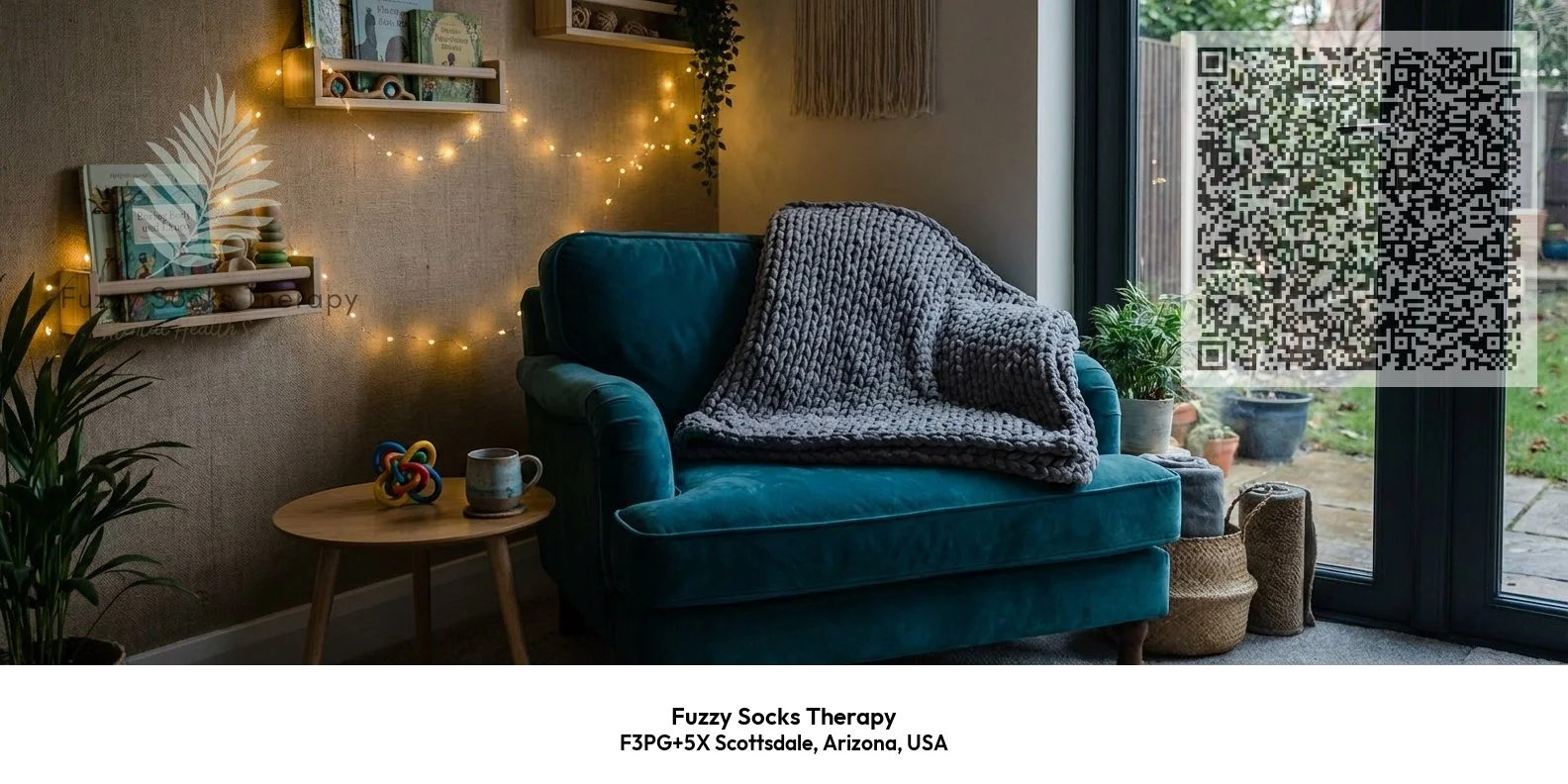
Sight helps most when it is simple. Natural light lowers arousal for many people within ten minutes. If that is not possible, use a warm bulb rather than blue-white. Some clients like a focal point - a tree outside, a photo of a calm landscape, or even a neutral wall with a single painting.
Sound can be silence, white noise, or gentle music without lyrics. If you share space, a white noise machine or a fan outside your door can give privacy. Earbuds work well, but avoid blasting music that spikes your heart rate.
Touch grounds us fastest. A weighted blanket, a warm mug, or a textured pillow anchors you in your body. People with sensory sensitivities, common in neurodivergent therapy, often benefit from predictable textures and firm pressure. If light touch irritates you, do not use it.
Place a notepad nearby. Jot down SUDs ratings, brief observations, or a word or two about what helped. Data builds trust.
The body sets the pace
Before you try imagery or bilateral stimulation, meet your body where it is. Sit with your feet on the floor. Let your spine be tall without being rigid. Soften your eyes. Inhale through your nose for a count of four, exhale through pursed lips for a count of six. You are lengthening the exhale to nudge your vagus nerve toward parasympathetic dominance. Do eight to ten cycles. If you get lightheaded, slow down or take a few normal breaths. This is not a performance.
If breath modulates you poorly - which happens with asthma, panic, or certain neurodivergent profiles - try a different entry: feel the chair holding you, name five things you see, press your hands together for five seconds, release for five. Gentle neck movements, like turning your head left then right while letting your eyes trace the wall line, can also cue safety.
Bilateral stimulation at home
Bilateral stimulation, or BLS, means alternating attention left and right. In trauma therapy it can help the brain integrate and downshift. At home, we favor slow, predictable patterns for calming rather than rapid sets for processing.
The simplest is the butterfly hug. Cross your arms so your right hand rests near your left collarbone and your left hand near your right collarbone. Tap left, right, left, right at https://andyqlxe564.iamarrows.com/couples-therapy-after-infidelity-repairing-and-rebuilding a comfortable rhythm. Think of the slow beat of a resting heart. For many people, about one tap per second works well. Keep your eyes open and soft, or gently closed if that stays grounding. Work in short sets of 15 to 30 taps, then pause to notice sensations. If your mind drifts, that is fine. If it speeds up, slow your taps.
Knee tapping is another option. Place your hands on your thighs and alternate a gentle pat left, then right. If tactile input is too much, try visual BLS by moving your gaze smoothly left to right across the room, following a line like the top of a bookshelf. Avoid bright screens at night, which can disrupt sleep.
Walking naturally creates bilateral input. A mindful five minute walk, noticing how your left and right foot meet the ground, calms many people with no special technique.
Core resource imagery, with details that make it work
Safe or calm place imagery is a staple, but it only sticks when you recruit senses. Think of a place you have been or can imagine where you felt settled - a lake at dusk, your grandmother’s kitchen, a mountain trail. Picture it from the inside, not as a photograph. What do your feet touch? What do you smell? Is there a breeze? Keep it simple and repeatable.
Once you have a few sensory details, add slow bilateral taps for 20 to 30 seconds while holding the image. Pause. Rate your SUDs. If distress is under 4 and the image holds, add one more detail and do another set. If the image shifts or distress rises, back out. Try a different place or a different sense - sometimes sound holds better than visual detail.
Container imagery is your cognitive boundary. Picture a sturdy, sealed container - a safe, heavy trunk, a bank vault, a steel shipping container with a lock whose click you can hear. Place intrusive thoughts or half-processed memories into it. Close it deliberately. If your mind argues that it will leak, make it heavier, or add a location like the bottom of a calm lake. Install this with slow bilateral taps. Clients often report sleeping better when they run this sequence for two minutes before bed.
Protector or nurturer figures can be real people, animals, fictional characters, or aspects of yourself at your best. One client used the image of a calm Labrador who sat between them and distress. Another used their soccer coach’s voice saying, Take a breath, we’ve got time. Install the figure’s presence and the felt sense it brings - warmth in the chest, strength in the legs - with short BLS sets. Avoid using someone who is also a source of mixed feelings. Mixed is normal, but it complicates early practice.
The lightstream is a versatile image: a warm or cool light that moves through your body, collecting tension or pain and sweeping it out. It is especially useful for headaches and stomach knots. Keep the path simple, top to bottom or head to hands, with BLS if you like. If the light gets stuck, slow down or imagine it flowing around the tight area rather than pushing through.
A simple at-home resourcing session flow
- Set a 15 to 20 minute timer and note your starting SUDs. Regulate your body with posture and breath or grounding for two to three minutes. Choose one resource - safe place, container, protector, or lightstream - and spend five to eight minutes building and installing it with slow BLS. Rest for one minute with eyes open, looking around your space, then do one more brief set if helpful. Close the session with gentle movement, a sip of water, and a note about what helped. End even if you feel you could push further.
This is enough. Frequency often beats duration. People who practice five days a week for 10 to 15 minutes report steadier gains than those who do an hour on Sunday.
Pacing, dosage, and what data to collect
Two numbers matter: SUDs for distress and a simple 0 to 7 belief rating for how true a positive statement feels. In EMDR therapy we call the latter a VOC, or Validity of Cognition. At home you can pick a phrase linked to your resource, like I can get calm or I can put that away for now, and rate how true it feels before and after practice. You might see shifts of 1 to 2 points after a week.
Track sleep quality, irritability, and any body symptoms across days. If headaches spike after longer sessions, shorten them. If your mind fights imagery, lean into tactile or movement resources. If you consistently finish sessions more agitated than you started, pause home practice and consult your therapist.
Handling activation when things get sticky
Even careful resourcing can stir embers. If a strong emotion or flash image pops up, name it out loud in a simple sentence. I am seeing the hallway, or Sadness is here. Orient to the room by turning your head and letting your eyes land on three objects you can name. Press your feet into the floor for a slow count of five. Uncross your arms to break the butterfly hug pattern and place one hand on your chest, one on your belly. Notice which hand moves more with your breath. Invite that movement to slow and deepen a little. Sip water. If the image persists, imagine placing it in your container and feeling the click of the lock. If you remain above a 6 on SUDs for five minutes, stop the session and do something practical and present: fold laundry, run cool water over your hands, step outside and name ten sounds.
If dissociation creeps in - foggy head, floaty limbs, tunnel vision - go upright, eyes open, bright light, heavier touch. Naming the month, date, and your address out loud can re-anchor you. Some clients keep a small vial of citrus oil to smell for a sharp sensory cue back to now.
Adapting for neurodivergent therapy
Autistic and ADHD clients often tell me imagery is either frustratingly vague or painfully vivid. The fix is specificity and agency. Build resources with concrete elements: a safe place might be a known room with a weighted blanket at 12 pounds, blackout curtains, and a playlist at 40 percent volume. Use fewer words and more sensation. If eye movements are overstimulating, favor slow tapping or rhythmic rocking in a chair.
Routines help. Same time of day, same chair, same opening breath count. Predictability reduces cognitive load. Stimming is not the enemy; it can be a natural bilateral rhythm. I have watched clients settle faster with a fidget that alternates hands than with formal tapping. Be cautious with interoception. If internal sensations are unreliable or aversive, start with external anchors - the feeling of a cool mug, the texture of a rug - and add internal awareness later.
Executive function challenges are real. Keep sessions short, and stack them onto existing habits: after brushing teeth, before lunch, right after logging off work. Reward consistency, not intensity.
Working with children at home
Child therapy that includes EMDR elements thrives on play, brevity, and co-regulation. Parents are the secret sauce. A five minute practice before bedtime can do more than a lecture about feelings. Make the butterfly hug into a game: Tap like a slow drum, match me, left then right. Use safe place imagery tied to something the child loves, like a fort made of pillows with a favorite stuffed animal on guard duty.
Establish a shared signal for pause, such as a hand raise. If the child looks glazed or wired, switch to sensory play: warm washcloth on the face, hand lotion with a calming scent, or a simple scavenger hunt for three blue things in the room. Kids are honest biofeedback. If they are yawning and snuggling closer, the system is settling. If they are bouncing or irritable, you have passed the useful dose.
Keep language concrete. Instead of Rate your distress, say, If that feeling were a weather report, what would it be - sunny, cloudy, raining, stormy? Over weeks, a child’s weather can shift earlier in the day, which tells you the practice is taking root.
Using couples therapy principles for co-regulation
Partners can support each other’s resourcing without turning the living room into a treatment room. Co-regulation is the science term for how one nervous system helps another settle. Two simple rituals go a long way.
First, set a daily check-in that is short and predictable. Sit facing each other, feet on the floor, and do one minute of shared slow breathing. Then one partner speaks for two minutes about what felt heavy or light today, while the other listens without fixing. Switch. End with a butterfly hug together or a synchronized knee tap while one of you guides a safe place image. This is couples therapy in microdoses: presence, permission, and a shared rhythm.
Second, create a pause plan for triggers. Agree on a phrase like Time out - regulation first. When tension rises, both of you step back for five to ten minutes of individual resourcing in separate rooms, then reconvene. The key is practicing the plan when you are calm so it is not weaponized during conflict. Partners who do this lower their reactivity curve within a few weeks. It is not magic. It is practice.
Technology and tools, used wisely
Tactile BLS is usually enough. If you prefer audio, alternate tones left and right through headphones at a slow pace. Keep volume low. There are apps with bilateral sound and metronomes; pick one that lets you slow to about 60 beats per minute and that does not push you toward processing prompts. Avoid late-night screen use. If you want guided imagery, choose recordings by licensed trauma therapists with a focus on safety. Stop any track that makes you feel rushed or overwhelmed.
Wearables that track heart rate variability can be motivating, but do not chase numbers. Your subjective sense of ease matters more than a strain score.
Crisis planning and aftercare
Plan first, then practice. Write down three layers of support. Layer one is self-help - your top three strategies that work within five minutes. Layer two is people - a friend you can text, a partner you can ask to sit with you, your therapist’s contact policy. Layer three is professional and urgent care - local crisis line, national hotlines, and the nearest urgent care or emergency department that handles mental health. If you have a history of self-harm or severe dissociation, keep this plan visible and share it with someone you trust.
After practice, do something ordinary. Wash a dish, water a plant, pet your dog. The return to mundane tasks tells your brain the work is safe to carry into life. Avoid scrolling social media for at least 15 minutes; the rapid novelty acts like bilateral stimulation with unpredictable content, which can undo the settling you built.
Hydrate and notice hunger. Stable blood sugar helps regulation. A small snack with protein can prevent a crash.
Measuring progress and knowing when to adjust
Progress at home looks like shorter recovery time after a stressor, fewer spikes into panic, improved sleep onset, and a greater sense of choice. In numbers: SUDs peaks may drop from 8 to 6, and recovery back to 3 may shorten from hours to minutes. You might find yourself reaching for a resource mid-meeting or while waiting in line. That is the goal.
If you stall or regress, check dosage first. Are sessions too long, too late at night, or too ambitious? Simplify. If you still struggle, bring your notes to therapy. The pattern may point to an unaddressed trigger or an underdeveloped resource. Sometimes we need to install a resource more explicitly in session before it holds at home.
There are hard seasons - grief after a loss, medical procedures, legal processes - when resources keep you afloat but do not lower SUDs much. That is not failure. It is life asking for more scaffolding. Lean on couples therapy skills, child-friendly rituals, or neurodivergent-informed routines to widen the base.
A brief story about pacing
A nurse in her forties, let us call her M, started EMDR therapy after years of night shift stress layered on childhood neglect. At home she did five minute butterfly hugs and safe place imagery before sleep. Week one, she slept through the night twice, a first in months. Week two, a memory fragment surfaced during practice and spiked her SUDs to 7. She used her container, then texted a friend to take a walk. We adjusted her plan: earlier in the evening, no imagery on work nights, and an added lightstream for headaches. Her baseline steadied. By month two, she could ride a wave of activation down in fifteen minutes instead of three hours. No heroics. Just consistent resourcing and respect for limits.
Where this fits in the bigger arc of trauma therapy
Preparation and resourcing do not replace processing. They prepare your nervous system to do it more humanely. When people try to skip the foundation, sessions yo-yo between flat and flooded. When they invest in it, even a few minutes a day, the work becomes tolerable and durable. For kids, it builds lifelong habits. For partners, it makes conflict safer. For neurodivergent clients, it offers structured, sensory-smart options that honor how their systems operate. For everyone, it demonstrates something quietly radical: your body can learn safety.
If you are starting EMDR therapy soon, bring this plan to your clinician. If you are between therapists, limit yourself to gentle resourcing until you have support again. If you are supporting a child or a partner, keep it simple and kind. The skills that matter most are repeatable, not dramatic. The nervous system loves rhythm, warmth, and choice. Offer those at home, steadily, and you will feel the difference.
Address: 3295 N. Drinkwater Blvd., Suite 10, Scottsdale, AZ 85251
Phone: (720) 378-8454
Website: https://www.fuzzysockstherapy.com/
Email: [email protected]
Hours:
Monday: 9:00 AM - 5:00 PM
Tuesday: 9:00 AM - 5:00 PM
Wednesday: 9:00 AM - 5:00 PM
Thursday: 9:00 AM - 5:00 PM
Friday: 9:00 AM - 5:00 PM
Saturday: Closed
Sunday: Closed
Open-location code (plus code): F3PG+5X Scottsdale, Arizona, USA
Map/listing URL: https://maps.app.goo.gl/cqhwvXU4UMg6QL1YA
Embed iframe:
The practice offers in-person therapy in Scottsdale along with online sessions for clients in Arizona, Colorado, and Florida.
Clients can explore services such as trauma therapy, EMDR therapy, Deep Brain Reorienting Therapy, neurodivergent therapy, child therapy, couples therapy, discernment counseling, and parenting intensives.
Fuzzy Socks Therapy is especially relevant for people navigating trauma, dysfunctional family dynamics, ADHD, autism, relationship conflict, and emotional overwhelm.
The website presents a direct, practical therapy style focused on real tools and meaningful change rather than vague advice.
Scottsdale clients looking for trauma-informed psychotherapy can find support that combines deeper healing work with concrete skill building.
The practice also offers help for adult children of dysfunctional families, couples on the brink, and neurodivergent kids, teens, and adults.
To get started, call (720) 378-8454 or visit https://www.fuzzysockstherapy.com/ to book a free consultation.
A public Google Maps listing is also available for Scottsdale location reference alongside the official website.
Popular Questions About Fuzzy Socks Therapy
What does Fuzzy Socks Therapy help with?
Fuzzy Socks Therapy helps with trauma, dysfunctional family patterns, neurodivergence, relationship conflict, emotional overwhelm, and related challenges for individuals, couples, and families.
Is Fuzzy Socks Therapy located in Scottsdale, AZ?
Yes. The official website lists the office at 3295 N. Drinkwater Blvd., Suite 10, Scottsdale, AZ 85251.
Does Fuzzy Socks Therapy offer in-person and online sessions?
Yes. The official site says the practice offers in-person therapy in Scottsdale and online therapy in Arizona, Colorado, and Florida.
What therapy approaches are listed on the website?
The website highlights EMDR therapy, Deep Brain Reorienting Therapy, discernment counseling, play therapy, Dialectical Behavior Therapy, Emotionally Focused Therapy, and practical trauma-informed skill building.
Who provides therapy at Fuzzy Socks Therapy?
The official website identifies the therapist as Lianna Purjes.
Does the practice offer couples counseling?
Yes. The website includes couples therapy, couples intensives, and discernment counseling for couples deciding whether to stay together or separate.
Does the practice work with children and adolescents?
Yes. The site says the practice offers child therapy and support for children, adolescents, and their families.
How can I contact Fuzzy Socks Therapy?
Phone: (720) 378-8454
Email: [email protected]
Website: https://www.fuzzysockstherapy.com/
Landmarks Near Scottsdale, AZ
Drinkwater Boulevard is the clearest local reference point for this office and helps nearby clients place the practice in Scottsdale. Visit https://www.fuzzysockstherapy.com/ for service details.
Old Town Scottsdale is a familiar city landmark and a practical reference for people searching for therapy near central Scottsdale. Call (720) 378-8454 to learn more.
Scottsdale Civic Center is another recognizable local landmark that helps define the surrounding area for nearby professional services. The official website has current contact details.
Scottsdale Stadium is a well-known destination in the city and a useful point of reference for local users. Fuzzy Socks Therapy offers both in-person and online sessions.
Indian School Road is a major corridor that helps many residents orient themselves in Scottsdale. More information is available at https://www.fuzzysockstherapy.com/.
Fashion Square and the surrounding central Scottsdale area are widely recognized by local residents and visitors alike. Reach out through the website to book a free consultation.
Downtown Scottsdale is a strong local search reference for people seeking counseling and psychotherapy services in the area. The practice serves Scottsdale in person and multiple states online.
Scottsdale Road is another major route that helps define the broader service area for clients traveling from nearby neighborhoods. The practice supports individuals, couples, and families.
The Scottsdale arts and civic district is a useful area reference for those familiar with the city center. Visit the site to review specialties and next steps.
Central Scottsdale commuter corridors make this practice relevant for nearby residents who want in-person therapy, while online sessions add flexibility for clients in Arizona, Colorado, and Florida.